Child Protection Commitment
At YMCA of Central New Mexico, keeping children safe is our top priority. We are committed to providing a secure and welcoming environment where all youth can learn, grow, and thrive. Our staff and volunteers follow strict safety policies, undergo background checks, and receive training to prevent and recognize abuse. We encourage open communication and take all concerns seriously to ensure the well-being of every child in our care. Protecting children is at the heart of everything we do.
Steps We Take To Create A Safe Environment:
• Background checks and screening
• Training programs for staff and volunteers
• Supervision and monitoring practice
• Guidelines for interactions with children and youth
• YMCACNM Child Protection Policy
Reporting Procedures:
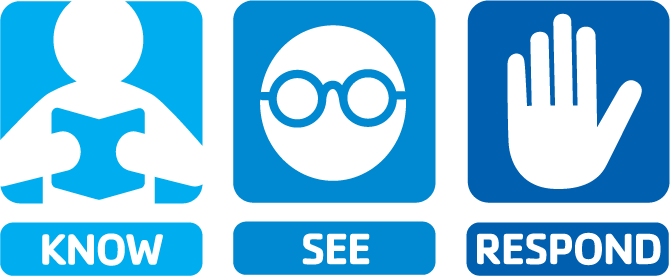
To ensure the safety and well-being of all children and participants, we have implemented the KNOW. SEE. RESPOND. Reporting Hotline and Form. This tool provides parents, members, volunteers, and employees with a simple and confidential way to report activities that may involve misconduct or violations of YMCA policy. While this reporting option is available, we also encourage you to communicate directly with your child’s program supervisor or any member of our leadership team if you have concerns. The hotline and form serve as a complement to our existing reporting methods and protocols.
THERE ARE TWO WAYS TO ENGAGE ANONYMOUSLY WITH THE KNOW. SEE. RESPOND.
REPORTING PROGRAM:
1. Submit a report using the form you see here.
2. Call 505-595-1515 Ext. 1111
Know the Facts
We pledge to protect the children we serve—and we hope you will, too. Knowing about child sexual abuse can help us better understand what to look for and how to keep it from happening in the first place…
One in ten children will be sexually abused before their 18th birthday. 90% of child sexual abuse victims know their abuser. 60% of child sexual abuse victims never tell anyone. These statistics (provided by Darkness to Light) are staggering and hard to read.
More troubling statistics are reported by Childhelp:
• Every year, more than 4 million referrals are made to child protection agencies involving more than 7.5 million children (a referral can include multiple children).
• The United States has one of the worst records among industrialized nations – losing more than 5 children every day to child abuse and neglect.
• In 2022 alone, state agencies found nearly 560,000 victims of child maltreatment.
New Mexico’s “Duty to Report Child Abuse and Child Neglect” law (32A-4-3) states that “Every person, including a licensed physician; a resident or an intern examining, attending or treating a child; a law enforcement officer; a judge presiding during a proceeding; a registered nurse; a visiting nurse; a schoolteacher; a school official; a social worker acting in an official capacity; or a member of the clergy who has information that is not privileged as a matter of law, who knows or has a reasonable suspicion that a child is an abused or a neglected child, shall report the matter immediately” to a local law enforcement agency, CYFD-SCI, or a tribal law enforcement or social services agency for any Indian child residing in Indian country.
Learn the facts and how you can keep kids safe.
Some Signs a Child is Not Safe
| Physical abuse |
| • Child appears frightened of the caregiver. • Child has burns, bites, broken bones, bruising, black eyes, orcomplaints of pain. • Caregiver offers no explanation of a child’s injury, the parent “blames” the child’s behavior or personality for the injury. Ask yourself “Does the story match the injury?” |
| Sexual abuse |
| • Child attaches very quickly to strangers or new adults in their environment. • Demonstrates unusual sexual knowledge or behavior for their age. • Difficulty walking or sitting. • Witnessing an adult inappropriately touching a child, watching pornography with a child, or saying sexual things to a child. |
| Emotional Abuse |
| • Child shows extremes in behavior: overly aggressive or compliant. • Appears emotionally unattached to caregiver and others. • Caregiver constantly blames, belittles, or berates the child, and refuses to help the child when needed. |
| Neglect |
| • Child begs or steals food, has severe poor hygiene or states that no one at home provides care. • Witnessing a child using alcohol or other drugs. • Highly stressful family situations and/or adults in home abusing alcohol or other drugs. • Unlocked weapons or guns in the home. |
Educational Videos:
• Abuse Prevention Introduction
• Recognize Abuse and it’s Warning Signs
• How to Talk to Youth About Abuse
• How to Respond to Child Abuse
• 6 Key Questions a Parent Should Ask of a Camp
Resources
Childhelp National Child Abuse Hotline
Anonymous reporting: 1-800-4-A-CHILD (1-800-422-4453)
www.childhelp.org/hotline
New Mexico Child Protective Services
1-855-333-SAFE (7233)
New Mexico Child Abuse Prevention Partnership
nmcapp.unm.edu/training-teaching.html
New Mexico Legal Aid Domestic Violence Helpline:
1-877-974-3400
The Helpline is a free statewide service that provides legal information, representation, and referral services to victims of domestic violence, sexual assault, and stalking throughout New Mexico.
Rape Abuse Incest National Network:
1-800-656-4673 (HOPE)
www.rainn.org
National Domestic Violence Hotline:
1-800-799-7233 (SAFE)
www.ndvh.org